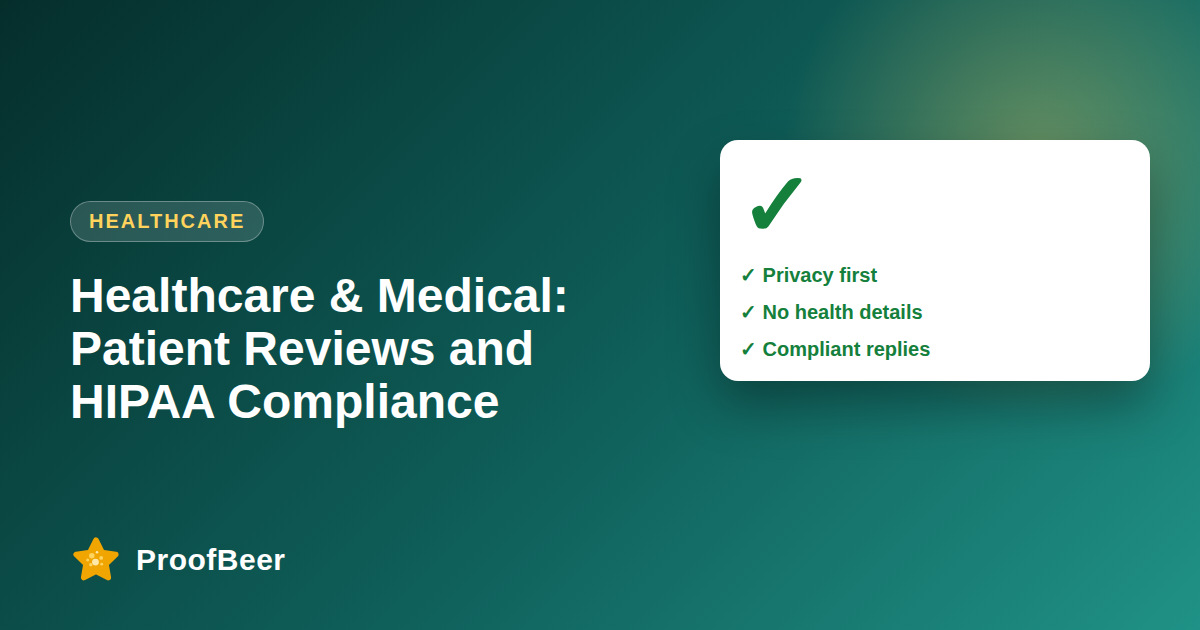
Medical practices can respond to patient reviews safely by never confirming that a reviewer is a patient, never discussing treatment or details, using generic courteous wording and inviting the person to talk offline. Collect reviews with privacy-safe requests, use trusted platforms, train staff on HIPAA and local rules, and ask counsel to approve your policy.
- Replying to a review in a way that reveals protected health information can create privacy risk even if the patient posted first.
- Avoid confirming or denying that the reviewer is a patient, and never mention diagnoses, treatments or appointments.
- Use short, generic, empathetic replies that invite the person to contact your office privately.
- Do not offer rewards tied to positive reviews, and follow platform and legal rules on incentives.
- A written policy, staff training and a record of approvals protect your practice.
- Requests for feedback should not reveal that someone is a patient in a way that could be seen by others.
- HIPAA is a United States law, so practices elsewhere should follow their own local privacy rules.
- This post is general information and not legal advice, so have your counsel review your policy.
What can't you do when replying to a patient review?
- Do not name the reviewer or confirm that the person is or was a patient of your practice.
- Do not mention diagnoses, treatments, medications, test results or appointment details, even to defend your care.
- Do not argue, correct facts in public or reveal anything that only a patient would know.
- Do not copy a patient's own words back in a way that confirms the relationship.
- Do not ask for reviews in a way that exposes health information, such as a public post naming a procedure.
What can you safely do?
- Thank reviewers in general terms, for example 'Thank you for your feedback'.
- Offer to discuss concerns offline and provide a phone number or email for the practice.
- Share general, non-identifying information about your policies, such as how the office handles scheduling.
- Respond to wait-time or service comments with a general commitment to improve, without confirming a specific visit.
- Ask the platform to remove reviews that violate its policies, such as spam or fake reviews, through its official tools.
What do safe reply examples look like?
- Positive reply: 'Thank you for taking the time to share your feedback. We are glad when people have a good experience with our team.'
- Negative reply: 'We take all feedback seriously. Please contact our office at [phone] so we can discuss your concerns privately.'
- Avoid any reply that says 'Thank you for visiting us for your knee surgery' or anything similar.
- Use the same neutral structure for every reply so no reply signals a patient relationship.
- Have counsel review your templates before using them.
Which platforms do healthcare practices use?
- Google Business Profile is usually the most visible platform for local patient searches.
- Healthgrades and similar directories may appear in search results and AI answers about providers.
- Yelp can matter for clinics and urgent care in some markets.
- Booking platforms such as Zocdoc may be relevant for some specialities.
- Check each platform's policy on responding to reviews and on any request for feedback.
How do you ask for reviews without risking privacy?
- Use a generic request that does not mention the type of care or the visit, for example 'Share your feedback about our practice'.
- Send requests privately and avoid group messages or public posts that reveal who your patients are.
- Get consent before using any review, name or image in marketing materials, and consider whether authorisation is needed under local rules.
- Never reward positive reviews or tie any incentive to rating.
- Provide an easy private feedback option in addition to public review links.
What operational steps protect your practice?
- Create a written review response policy approved by your compliance officer or counsel.
- Train front desk and marketing staff on what they may and may not say.
- Assign one trained person to monitor and reply, with a second person approving sensitive cases.
- Log reviews, responses and any removal requests so you have a record.
- Review the policy each year and after any change in law or platform rules.
Step-by-step: how to do this with ProofBeer
Appoint a compliance owner and ask counsel to review your review-response approach.
Write a short policy that lists what can and cannot be said in public replies.
Draft generic positive and negative reply templates and have counsel approve them.
Train every staff member who might reply to or ask for reviews.
Set up monitoring for Google, directories and other platforms where your practice appears.
Reply within a few days using the approved templates, and never confirm a patient relationship.
Move concerns to private channels and log the outcome without putting details in public.
Review the policy every year and after any platform or legal change.
Common mistakes to avoid
Metrics to track
Average rating and review count on key platforms.
Median time to first reply.
Share of replies that use approved templates.
Number of staff trained on the review policy.
Number of reviews reported for policy violations and the outcome.
Quick checklist
Examples and templates
'Thank you for your feedback. We appreciate everyone who takes the time to share their thoughts.'
'We are sorry to hear you were disappointed. Please call our office at [phone] so we can talk privately.'
'We value feedback about our practice. Share your thoughts here: [link].'
- Never reply from a personal account
- Treat every reply as if the patient will read it publicly and so will others
- Avoid copying details from an internal record into any reply
How ProofBeer Helps You Grow
Collect feedback through a privacy-conscious form that does not publicly reveal who your patients are.
Bring Google and other review sources into one dashboard so one trained person can monitor and reply from approved templates.
Keep a log of review requests and replies to support your internal compliance records, and ask counsel what you need to retain.
Frequently Asked Questions
Can I reply to a patient review under HIPAA?
You can reply, but you must not disclose protected health information or confirm that the reviewer is a patient. Use generic wording and invite the person to contact you privately. Ask your counsel to approve your approach.
Can I thank a patient by name in a reply?
It is safer not to. Using a name can confirm a patient relationship. Thank reviewers in general terms and move any specific conversation to a private channel unless counsel has approved a different approach.
Can I ask patients for reviews?
Generally yes, if the request is generic, private and does not reveal health information. Do not offer rewards for positive reviews, and follow platform rules and any local privacy requirements.
What if a review contains false information?
Do not rebut the facts in public. Reply generally, invite the reviewer to contact you, and report the review to the platform if it violates policy. Keep records and ask counsel before taking further action.
Does HIPAA apply outside the United States?
HIPAA is a United States law. Practices in other countries must follow their own privacy and medical confidentiality rules, such as GDPR in the EU. The same cautious approach of generic replies is a sensible baseline.
Which review sites matter most for medical practices?
Google Business Profile is usually the most important, followed by healthcare directories such as Healthgrades and sometimes Yelp or booking platforms. Check where your own patients search and prioritise those platforms.
Conclusion
Healthcare reviews build trust, but replies must protect privacy first. Use generic, courteous wording, move details offline and put a written, counsel-approved policy in place for your whole
team.
- HHS - HIPAA Privacy Rule and social media guidance
- Google Business Profile policies