Customer reviews support SEO by adding fresh, customer-written text, natural long-tail phrases and trust signals that can improve engagement. Star rich snippets are possible only for eligible page types and never for self-serving LocalBusiness or Organization reviews. Show reviews as crawlable HTML text, link to them internally and keep them real and recent.
- Reviews are not a magic ranking factor, but they add useful, unique, experience-based content that search engines and AI systems can read.
- Customers naturally use long-tail phrases such as 'fast shipping for hiking boots' that match real searches.
- Review text must be visible in the page HTML rather than loaded only by a script that crawlers may skip.
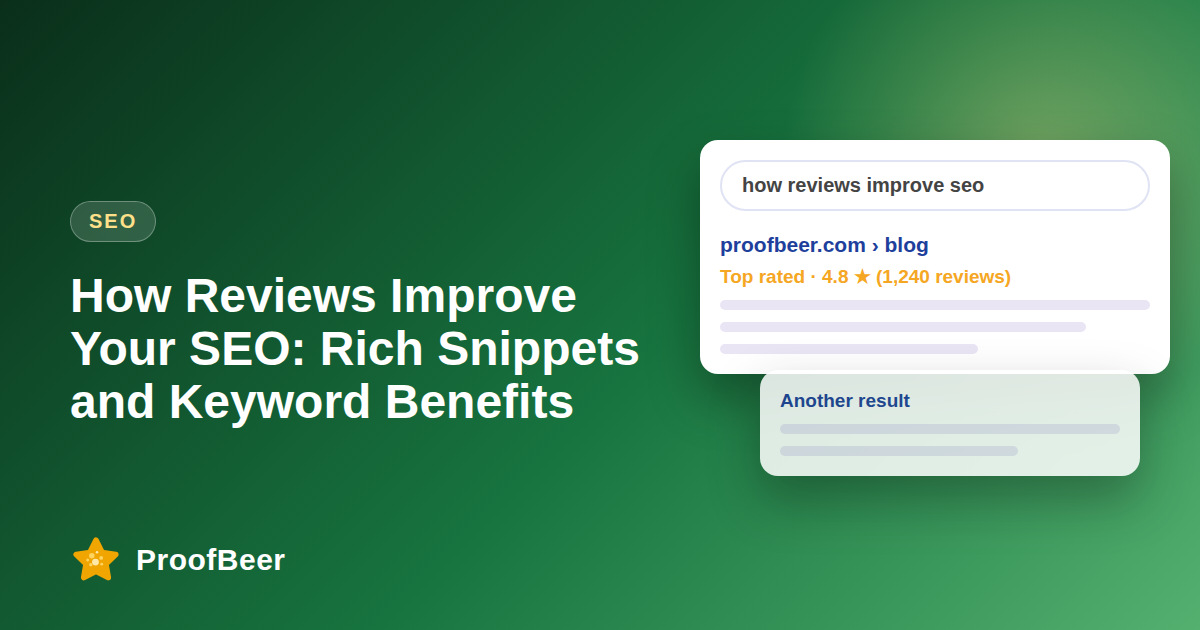
- Star snippets depend on eligible schema types, and Google does not show them for reviews a business controls about itself.
- Never add schema for ratings copied from other sites or for reviews that visitors cannot see.
- A dedicated reviews hub page with internal links helps both visitors and crawlers find your proof.
- Trust and engagement improvements may raise click-through and conversion rates, so measure them in your own analytics.
- Google says no special markup is required for AI features, so accurate, helpful content with first-party reviews is the safest approach.
How do reviews add fresh content to a page?
- Each new review adds text that changes the page over time, which signals that the page is active and maintained.
- Reviews bring experience-based detail such as how a product was used, which supports the experience part of E-E-A-T.
- Freshness from reviews alone is not enough, so keep updating descriptions, images and guides as well.
- Dates on reviews make it clear to readers and crawlers when the feedback was written.
- Moderate reviews so that spam and off-topic text do not dilute the page.
Do reviews help you rank for long-tail keywords?
- Customers describe products in their own words, so reviews often contain phrases that your marketing copy never used.
- These phrases match how real people search, which can help a page appear for more query variations.
- Pages with many substantive reviews may therefore attract a wider range of long-tail traffic over time.
- Never edit review wording to insert keywords, because manipulated reviews break trust and platform rules.
- Use review language as inspiration for headings, FAQs and product descriptions instead.
When can reviews produce rich snippets?
- Google supports review snippets for specific types such as Product, Software Application, Course, Recipe and a few others.
- Self-serving reviews about a LocalBusiness or Organization that the business itself controls are not eligible for stars.
- Ratings must come from your own visible reviews and must not be aggregated from other websites.
- Test the markup with Google's Rich Results Test and check the Search Console enhancement reports.
- Even valid markup does not guarantee stars, because Google decides when to show them.
How do reviews affect engagement and trust?
- Genuine reviews can increase time on page because visitors read real experiences before deciding.
- Trust signals near a call to action can improve conversion, though you should test this on your own site.
- Showing reviewer names, dates and ratings makes the proof more believable than anonymous praise.
- A balanced mix that includes some critical reviews usually looks more credible than perfect scores.
- Reply to reviews publicly, because replies add more helpful text and show that real people run the business.
What is the SEO checklist for reviews?
Step-by-step: how to do this with ProofBeer
Audit which key pages already show reviews and which do not.
Check that the review text appears in the page source rather than only in a script.
Add review schema only to eligible types and only for reviews visible on the page.
Create a reviews hub page that groups testimonials by product or service.
Add internal links from product, service and blog pages to the hub.
Refresh the page regularly with new reviews, replies and updated summaries.
Monitor impressions, clicks and rich result reports in Search Console each month.
Common mistakes to avoid
Metrics to track
Organic clicks to pages that show customer reviews.
Click-through rate for pages with and without star snippets.
Number of pages indexed with visible review text.
Impressions for long-tail queries that appear in review language.
Conversion rate on pages with reviews near the main call to action.
Quick checklist
Examples and templates
'Customer Reviews and Testimonials - Brand Name'
'read what customers say about our setup service'
'Thank you, Maria. We are glad the setup was quick and clear.'
- Treat review language as a source of FAQ questions for your pages
- Never buy, trade or edit reviews to influence rankings
- Compare pages with and without reviews over several months before drawing conclusions
How ProofBeer Helps You Grow
Crawlable review display options help you show review text on your pages rather than hiding it in scripts.
Review pages and a Wall of Love give you a hub that you can link to from product, service and blog pages.
Lightweight widgets are designed to keep pages fast, and you can test their effect with PageSpeed Insights.
Frequently Asked Questions
Do reviews help SEO?
They can help indirectly. Reviews add fresh, unique text, natural long-tail phrases and trust signals that can improve engagement, but they are not a guaranteed ranking factor. Treat them as one part of useful content and a good user experience.
Do reviews give rich snippets?
Only for eligible page types with valid markup that matches visible content. Google decides whether to display stars, and it does not show them for self-serving LocalBusiness or Organization reviews. Check eligibility in Google's review snippet documentation before adding schema.
Should I add review schema to my homepage?
Not for self-serving reviews about your own business or organisation, because Google does not treat those as eligible for stars. Use schema on eligible entities such as a specific product or software application, and keep it consistent with visible reviews.
How many reviews do I need for SEO value?
There is no magic number. Quality, relevance and freshness matter more than raw count. A steady flow of genuine, detailed reviews is more useful to readers and search systems than a large batch posted at one time.
Can I stuff keywords into replies to reviews?
No. Write replies for the customer first, using natural language and the product name where it fits. Keyword stuffing makes replies look spammy, can harm trust and does not help rankings.
How often should I update review content?
Update continuously by collecting new reviews, and review the page at least quarterly. Refresh summaries, remove outdated claims and check that your schema and widgets still work. Add a visible last-updated date so readers and crawlers can see the page is maintained.
Conclusion
Reviews support SEO when they are real, visible and well structured. Show them in crawlable text, use schema only where Google allows it and keep collecting fresh feedback.
- Google Search Central
- Moz or Ahrefs guides