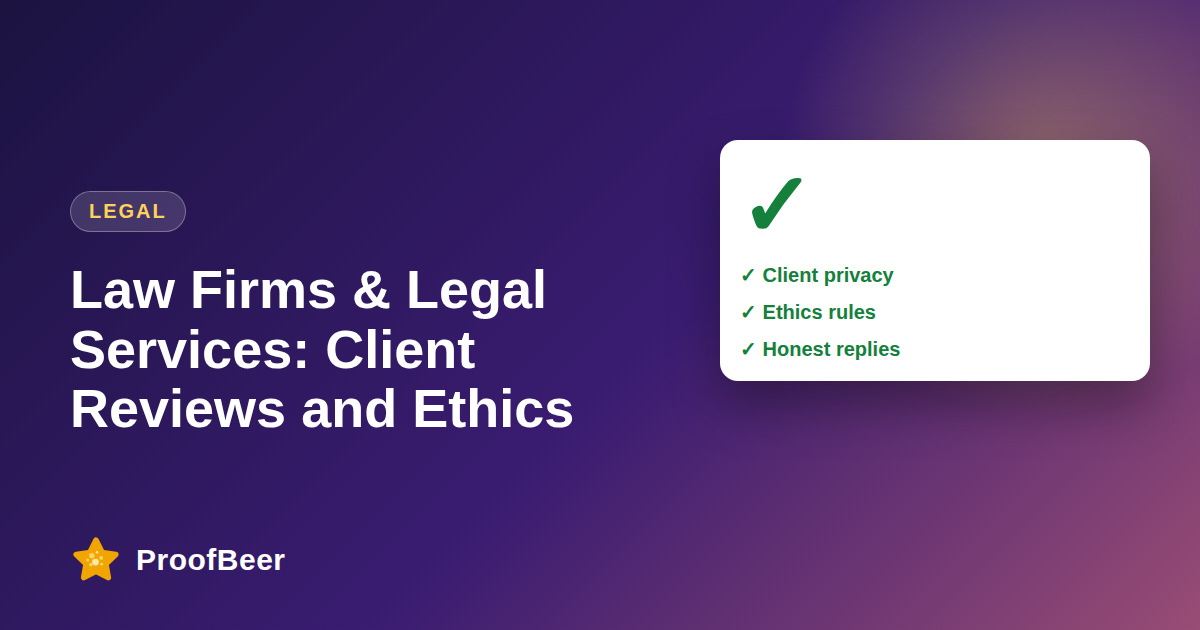
Law firms can use client reviews and testimonials, but must follow the advertising and professional conduct rules of their jurisdiction. These generally prohibit misleading claims, require protecting client confidentiality, and may require disclaimers and written consent. Rules differ by state or country, so confirm with your bar association before publishing. This is general information, not legal advice.
- Client reviews and testimonials are usually treated as lawyer advertising, so the same rules against false or misleading communications apply.
- ABA Model Rule 7.1 prohibits false or misleading statements about a lawyer's services, and many states adopt a version of it.
- ABA Model Rule 1.6 on confidentiality means a lawyer should not reveal client information in a response to a review without the client's informed consent or another permitted basis.
- Some jurisdictions require disclaimers such as 'results vary' or restrict testimonials about outcomes, so check your own state bar rules first.
- Never write or buy reviews, and never ask clients to post a review in return for a discount or a fee reduction.
- Responding to a negative review is where firms most often get into trouble, so keep replies generic and never discuss the facts of the matter.
- Get written consent from the client before using a name, case outcome or video, and keep it on file.
- Review your policy at least once a year, because bar opinions and platform rules change.
Are client reviews allowed for law firms?
- In most jurisdictions client reviews and testimonials can be used, but they are treated as part of the firm's communications about its services.
- That means the general rule against false or misleading statements applies to reviews you publish, display or promote.
- Some states have specific rules or ethics opinions on testimonials, so a general guide is not enough.
- Reviews that a firm does not control on a third-party site are treated differently from those it selects and publishes, but the firm may still be responsible for what it adopts.
- Always check your own bar's advertising rules, and ask the bar's ethics counsel if the answer is unclear.
What do the ABA Model Rules say?
- Model Rule 7.1 says a lawyer shall not make a false or misleading communication about the lawyer or the lawyer's services.
- A communication can be misleading if it omits a fact needed to make the statement not misleading or creates unjustified expectations about results.
- Model Rule 1.6 protects information relating to the representation of a client, so firms cannot reveal confidential details even when responding to criticism.
- The Model Rules are a template, and each state adopts its own version with its own commentary and opinions.
- Check the version in force in every state where your lawyers are licensed .
How should you handle outcomes, case results and disclaimers?
- Be cautious with testimonials that mention results, because they can create unjustified expectations that every client will get the same result.
- Some jurisdictions require a disclaimer that past results do not guarantee future outcomes, or restrict testimonials about outcomes altogether .
- Keep any claims accurate, current and supported, and do not use partial quotes that change the meaning.
- Do not quote a dollar figure or a verdict unless it is accurate and allowed under your rules.
- Place required disclaimers near the testimonial where they are easy to see.
How do you get consent and protect confidentiality?
- Ask the client in writing before using their name, photo, quote or video, and explain where it will appear.
- Make clear that agreeing is voluntary and will not affect their representation.
- Allow clients to withdraw their consent and remove their content on request.
- Do not confirm that someone is a client in a public reply, because the fact of representation can itself be confidential.
- Keep signed consents with a date and the exact wording approved.
How should you respond to negative reviews and ask for reviews fairly?
- Reply briefly and generally, such as 'We take feedback seriously and would welcome a conversation offline', without discussing the matter or any client details.
- Never argue the facts in public, even if the review is inaccurate, because you may breach confidentiality.
- Ask all clients for feedback at the end of the matter in a neutral way, without promising anything in return.
- Do not offer fee reductions or gifts in exchange for a review.
- Report fake or defamatory reviews to the platform through its official process.
Step-by-step: how to do this with ProofBeer
Identify the advertising and professional conduct rules for every jurisdiction where your lawyers are licensed.
Read the relevant bar opinions on testimonials, reviews and responses to online criticism.
Write an internal policy on requesting, publishing and responding to client reviews.
Draft a consent form that explains where the testimonial will appear and allows withdrawal at any time.
Add any required disclaimer near each published testimonial.
Send a neutral request for feedback to clients at the close of the matter, without incentives.
Prepare a short, generic template for replying to negative reviews that reveals no client information.
Have the policy reviewed by ethics counsel and revisit it at least once a year.
Common mistakes to avoid
Metrics to track
Number of client reviews received per quarter across platforms.
Share of published testimonials with signed consent on file.
Average time to reply to a review with a compliant response.
Number of reviews reported or removed for violating platform policy.
Date of the last compliance review of your testimonial policy.
Quick checklist
Examples and templates
'I agree that my name and comments may be published on the firm's website. I understand I can withdraw this at any time.'
'Testimonials do not guarantee a similar outcome. Each case is different.'
'We take all feedback seriously. We are unable to discuss any matter publicly, but we welcome a conversation offline.'
- Never confirm or deny that someone is a client in a public reply
- Keep the replies short and neutral
- Ask your ethics counsel to review the final policy
How ProofBeer Helps You Grow
Collect client feedback through ProofBeer forms that include a clear consent statement and capture the date of consent.
Moderate reviews before they appear on your website, so you can check for confidential details or claims that need a disclaimer.
Add compliance wording to widgets and testimonial pages , and keep an organised record of approvals.
Frequently Asked Questions
Can a law firm use client testimonials on its website?
Often yes, but it depends on the jurisdiction. Testimonials are usually treated as advertising, so they must not be false or misleading, and some states require disclaimers or restrict outcome claims. Get written consent and check your bar's rules first.
Can a lawyer respond to a negative online review?
Yes, but carefully. Keep the response short and general, and do not reveal confidential information or argue the facts. Many bar opinions warn against disclosing client details to defend yourself in public. Consider inviting an offline conversation.
Is it okay to offer a discount for a client review?
This is risky and often prohibited or restricted. Incentives can create conflicts with advertising rules and platform policies, and the FTC rule restricts rewards tied to reviews. Do not offer them without clear guidance from your bar.
Do I need a disclaimer on law firm testimonials?
Some jurisdictions require or recommend one, particularly when a testimonial refers to a result. A typical disclaimer says that past results do not guarantee future outcomes. Check your state bar's rules to see what is required.
Can I ask clients to leave a review?
Generally yes, if the request is neutral, voluntary and does not promise anything in return. Do not pressure clients or ask only those who are satisfied. Confirm your bar's guidance on solicitation of reviews.
Is this guide legal advice?
No. It is general information about common issues and not a substitute for advice from a qualified lawyer or your bar's ethics counsel. Rules differ by jurisdiction and change over time, so always confirm the current requirements.
Conclusion
Reviews can build trust for a law firm when they are handled within the rules. Know your
jurisdiction's requirements, protect confidentiality, get written consent and never reply with
client details. Check everything with your bar before publishing.
- ABA Model Rules of Professional Conduct - Rules 7.1 and 1.6
- Your state bar's advertising rules
- FTC Consumer Reviews and Testimonials Rule