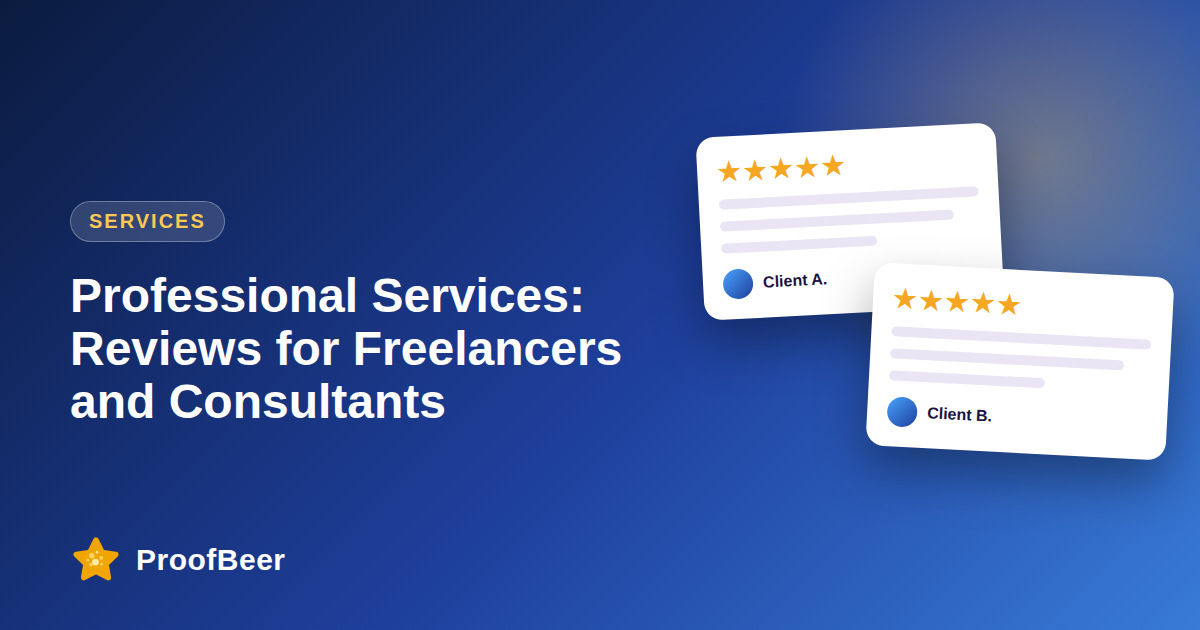
Freelancers and consultants build a reputation that sells by asking every satisfied client for a specific review at project close, using platform tools such as Upwork, Fiverr or LinkedIn recommendations, and publishing the results on their own site with permission. Never pay for reviews, because platforms and the FTC prohibit it. Ask within a week of delivery while the result is fresh.
- Trust is the main product a freelancer sells, and reviews from past clients are the fastest way to build it before a prospect has ever spoken to you.
- Ask for a review at the moment of delivery or when a client mentions a positive outcome, rather than weeks later.
- Never pay for reviews or exchange favours for them, since platform rules and FTC guidance prohibit this.
- Specific reviews that mention the problem, the work and the result are more persuasive than generic praise.
- Collect reviews on the platforms that matter and also on your own website to control the presentation.
- Client confidentiality matters, so get permission to name companies and use project details.
- Do not claim that high ratings produce a specific multiple of proposals, since no reliable evidence supports a fixed figure.
- Track which projects and channels generate reviews so you can focus on the best sources.
Why do reviews matter so much for independent professionals?
- Clients are buying from one person and cannot inspect the work beforehand, so they rely heavily on what previous clients say.
- A strong set of reviews replaces the credibility of a large brand name and shortens the sales conversation.
- Reviews help marketplaces and search engines understand your skills and the kind of work you do.
- They also answer common objections about reliability, communication and results without you having to say it yourself.
- Detailed reviews give AI assistants and search engines quotable evidence of your experience and expertise.
When and how should you ask for a review?
- Ask at project completion when satisfaction is highest, and mention that a short review would help future clients.
- Send a personal email or message rather than a form letter, and make it easy with a direct link to the right page.
- Suggest a few prompts such as the problem, the work done and the outcome, without writing the review yourself.
- Follow up once after a week if there is no response, then let it go.
- Make the request after the final payment or approval so the client does not feel any pressure.
Which platforms should you collect reviews on?
- Use the marketplace where you win work, such as Upwork or Fiverr, and follow its policy on how reviews can be requested.
- Ask for LinkedIn recommendations from clients and managers, since these appear on your profile and are visible to buyers.
- Consider Google Business Profile if you serve a local market and have a legitimate business listing.
- Collect testimonials on your own website so you control the layout, permissions and structured data.
- Avoid moving marketplace clients off-platform to review if that breaks the platform's terms.
What does a review that sells look like?
- It names the problem the client had, such as slow reporting or unclear messaging, in their own words.
- It describes the work or approach, such as the audit, workshop or build, in a sentence or two.
- It states the outcome in a measurable or concrete way, but only when the client chooses to share it.
- It includes the client's name, role and company when permission is given, which adds credibility.
- It mentions communication, reliability or deadlines, since these are common worries for people hiring independents.
What rules and ethics apply?
- Do not pay for reviews or offer discounts in exchange for positive ones, as the FTC rule and platform policies prohibit it.
- Do not write reviews for yourself, use alternative accounts or ask friends who were not clients.
- Respect client confidentiality and NDAs, and do not display names or results without written approval.
- Disclose any material relationship, such as a review from a partner agency or family member.
- Respond professionally to critical reviews and focus on what you learned and changed.
How do you reuse reviews to win more work?
- Add a short testimonial strip to your proposal template, matched to the client's industry or problem.
- Create a dedicated reviews page on your website with a few detailed quotes and links to the original platform profiles.
- Share one review per month on LinkedIn with a short story about the project, with permission.
- Include a relevant quote in cold emails and pitch decks when you can match the situation.
- Update your profile headline and portfolio with phrases that clients repeat in reviews.
Step-by-step: how to do this with ProofBeer
List recent clients who were happy and note the main results of each project.
Check each marketplace's policy on how and when you may request reviews.
Write a short personal request message with a direct link and two or three prompts.
Send the request at project completion, and follow up once after a week.
Ask permission to quote the review on your website and in proposals, including whether to name the client.
Publish the reviews on a reviews page with a clear layout and add structured data where eligible.
Add matching quotes to your proposal template and pitch deck.
Review your sources each quarter and set a goal for the number of new reviews.
Common mistakes to avoid
Metrics to track
Number of new client reviews collected per quarter.
Share of completed projects that produce a review.
Win rate on proposals that include a relevant testimonial.
Time from project completion to review request.
Number of inbound enquiries mentioning reviews or recommendations.
Quick checklist
Examples and templates
'Thank you for a great project. Would you share a few lines on the problem we solved and the result? Here is the link'
'What was the challenge? What did we do? What changed afterwards?'
'A past client in your industry said...' followed by a short permitted quote
- Send the request from your own email so it feels personal
- Never write the review for the client
- Thank every reviewer within a day
How ProofBeer Helps You Grow
Send clients a simple ProofBeer review link at project close so the request takes seconds .
Collect testimonials with written permission captured on the form, and display them on your own Wall of Love page.
Keep all your reviews organised by project type so you can pull matching quotes into proposals quickly.
Frequently Asked Questions
When is the best time to ask a client for a review?
Ask at project completion or soon after a client praises the result, ideally within a week. Satisfaction is highest then and details are fresh, which produces more specific and useful reviews.
Can I offer a discount for a review?
Do not offer a discount or any reward in return for a review. Platform policies and FTC rules prohibit paying for reviews, and doing it risks account suspension and legal trouble.
Do I need permission to use a client's name?
Yes, ask for written approval before naming the client, the company or any results. Some clients have NDAs, so offer an anonymised version such as 'Marketing Director at a software company' if they prefer.
Are LinkedIn recommendations better than platform reviews?
They serve different purposes. Marketplace reviews are tied to verified projects on that platform, while LinkedIn recommendations are visible to your wider network. Use both, and also publish selected quotes on your own website.
How many reviews do I need to look credible?
There is no magic number. A handful of detailed, specific reviews from recognisable clients usually persuade more than many short ones. Aim for steady growth and recent examples rather than a particular count.
How should I handle a bad review as a freelancer?
Respond politely, acknowledge the issue, explain any facts calmly and describe what you changed. Do not argue or reveal confidential details. Prospective clients often judge you more by how you respond than by the review itself.
Conclusion
For freelancers and consultants, reviews are a sales asset that you can build ethically. Ask at
the right moment, collect specific detail, get permission, never pay for praise, and reuse the
proof in proposals and on your own site.
- Upwork and Fiverr policy pages
- LinkedIn recommendations help