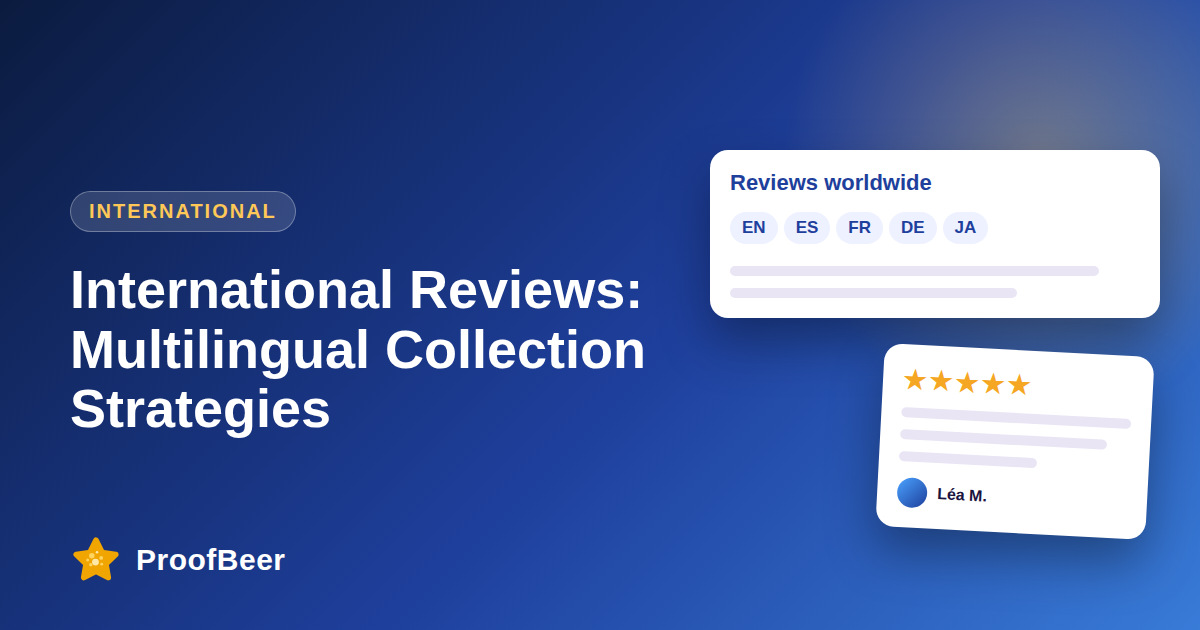
To collect and answer international reviews, offer review requests in each customer's language, let people write in their own language, use machine translation with human checks for replies, and respect local platform preferences. Set up a language workflow, local response templates and clear owners so every market feels heard.
- Customers respond better to review requests written in their own language, so localize the ask and not just the product.
- Let customers write reviews in the language they prefer and keep the original text alongside any translation.
- The most used review platforms differ by country, so research each market before choosing where to collect reviews.
- Machine translation is useful for triage, but important replies should be checked by a fluent speaker.
- Cultural norms affect tone, so formal and informal styles may need different templates by market.
- Local privacy and consumer laws, such as GDPR in Europe, apply to how you collect and store reviews.
- A language workflow with clear owners prevents non-English reviews from going unanswered.
- Verify platform relevance for each market with current local research, rather than assuming a list of sites from a blog post.
Why does language matter for review collection?
- People are more likely to respond when the request feels natural in their own language and culture.
- Reviews in local languages carry credibility with local shoppers who may ignore English reviews.
- Search engines and AI tools match language to users, so local-language reviews can support local discovery.
- Ignoring non-English feedback can hide product or service problems that only appear in some markets.
- Showing that you answer in the customer's language builds trust and loyalty.
How do you set up multilingual collection?
- List your top markets and the languages customers use, based on your own data such as order and support records.
- Translate your review request emails, forms and thank-you pages, and have a native speaker review them.
- Allow customers to submit in any language, and keep the original text.
- Use language-specific links or auto-detect the browser language where possible.
- Keep the same rating scale across languages so that results can be compared.
Which platforms matter in each market?
- The right review site depends on the country and industry, and Google Business Profile has broad support across many languages and regions.
- Platforms such as Trustpilot publish guides for businesses, and local or regional sites may be more important in some markets.
- Do not assume that a platform popular in one country is relevant in another, so validate with local market research.
- Ask local customers and partners where they look for reviews before committing resources.
- Check each platform's terms, supported languages and display rules for your region.
How do you handle translation and replies?
- Use machine translation to quickly read and categorize reviews, then confirm key details with a fluent speaker for sensitive cases.
- Create reply templates in each language that sound natural, not word-for-word translations.
- Adjust formality, greetings and sign-offs to the local norm.
- Reply in the language of the review whenever you can, and say so if a translation was used.
- Keep a glossary of product terms so translated replies use consistent wording.
What compliance points should you check?
- GDPR and other privacy laws can apply to reviews that include personal data, so have a lawful basis and clear privacy notices.
- Consumer protection rules on fake reviews and incentives differ by country, so check local requirements.
- Some regions require specific consent wording for marketing emails that contain review requests.
- Store the original language and translation together so you can verify what was said.
- Seek local legal advice in markets where you have significant volume or regulatory exposure.
Step-by-step: how to do this with ProofBeer
Identify the countries and languages that matter using your sales, support and analytics data.
Research which review platforms are used in each market and check their terms.
Translate review requests, forms and thank-you messages, with native speaker review.
Set up collection links or forms that accept reviews in any language.
Use machine translation to read incoming reviews, and flag those needing human review.
Create reply templates for each language with local tone and a product glossary.
Assign an owner and service level for each language so reviews are answered on time.
Review results per market each quarter and adjust languages and platforms.
Common mistakes to avoid
Metrics to track
Track review response rate by language and market every month so changes are easy to spot.
Track median reply time by language every month so changes are easy to spot.
Track review volume by market per month every month so changes are easy to spot.
Share of non-English reviews answered in the same language.
Track rating by market and language every month so changes are easy to spot.
Quick checklist
Examples and templates
'Thank you for choosing us. Would you share your experience in your own words?'
greeting in local style, thanks, specific acknowledgement, next step, sign-off
product term, approved translation per language, notes on tone
- Keep the original text beside each translation
- Check formality norms with local staff
- Report metrics by language to find under-served markets
How ProofBeer Helps You Grow
ProofBeer forms and collection pages can be set up in different languages , so requests feel natural to each market.
Reviews and testimonials stay in one place with the original text, so your team can see feedback from all markets together.
Exports and widgets help you show local-language reviews to local visitors and report results by market.
Frequently Asked Questions
Should I ask for reviews in the customer's language?
Yes whenever you can. A request in the customer's own language usually feels more natural and may improve response. Have a native speaker review translations so the tone and wording fit the market.
Can I use machine translation for replies?
It is useful for quick triage and simple replies, but human review is wise for complaints, legal topics or anything sensitive. Keep a glossary and tested templates so wording stays natural and accurate.
Which review sites should I use in other countries?
It depends on the market and industry. Google Business Profile is widely available, and other platforms vary by region. Validate through local research and customer feedback instead of copying a list from a blog.
Do I need to translate reviews on my website?
Showing the original review with an optional translation is a good approach. Label translated text clearly, and keep the original so visitors and moderators can verify what the customer wrote.
How does GDPR affect international review collection?
If you collect reviews from people in the EU, personal data rules apply to names, emails and review content. Provide clear privacy notices, a lawful basis and ways to request deletion, and seek legal advice for specific cases.
How many languages should I support?
Start with the languages of your top markets by revenue or customer count, and add more as volume grows. It is better to serve a few languages well than many languages poorly.
Conclusion
International review programs succeed when each customer is addressed in their own language and each market's norms are respected. Build a simple language workflow, verify platforms locally and
keep humans involved where it matters.
- Google Business Profile language support
- Trustpilot business guides
- Local market research