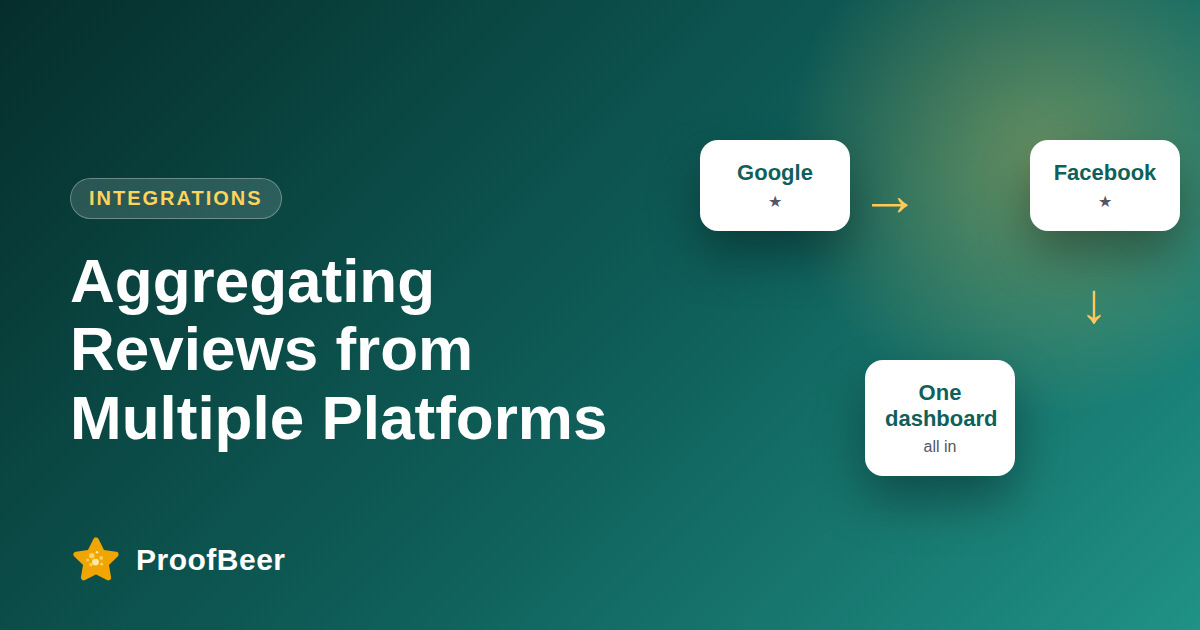
To aggregate reviews from multiple platforms, connect each source such as Google, Facebook and your own forms into one dashboard or sheet, standardize fields like rating, date and text, remove duplicates, and display or analyze them together. Use official APIs and platform terms, and verify each tool's features and pricing before buying.
- Aggregation puts reviews from every platform in one place so you can monitor, respond and report without logging into many accounts.
- Consistent fields for source, date, rating, text and status make combined data usable.
- Official platform APIs and sanctioned integrations are safer than scraping, which can break terms of service.
- Not every platform allows reviews to be displayed on your site, so check each platform's display rules.
- Deduplicating and flagging repeated reviews prevents inflated counts in your reports.
- Choose a method by team size and budget, from a simple spreadsheet to a dedicated platform.
- Pricing for aggregation tools changes frequently, so verify it on each vendor's pricing page.
- ProofBeer can serve as a native place for collecting testimonials and reviews alongside imported sources.
Why aggregate reviews in one place?
- You see rating and volume across all platforms at once, which gives a fuller picture of your reputation.
- Your team can respond faster because new reviews arrive in one queue.
- Reporting becomes consistent, since every source uses the same fields and time periods.
- You can spot patterns that only appear when platforms are combined, such as the same complaint on Google and Facebook.
- You reduce the risk of missing a negative review on a platform that nobody checks regularly.
What are your options for aggregating?
- A manual spreadsheet, where someone copies new reviews on a schedule, is cheap and works for a few reviews a week.
- Automation tools such as Zapier or similar can move reviews from supported sources into a sheet.
- Dedicated reputation or review management platforms connect to many sources through official partnerships and APIs.
- Developers can use official APIs, such as the Google Business Profile API, to pull reviews directly into their own systems, subject to access approval.
- Collection tools like ProofBeer capture first-party reviews and testimonials directly, so some of your data starts in one place.
What should a good aggregation setup include?
- A standard schema with source, reviewer name, date, rating, text, link to the original and response status.
- Automatic updates or a clear refresh schedule so the data is not stale.
- Alerts for new low ratings so that urgent issues are not buried.
- Filters by source, location, product and date for analysis.
- Export options so you can share data with leaders or other tools.
What rules and limits apply?
- Each platform sets its own rules about how reviews may be copied, displayed and used, so read the current terms.
- Scraping review pages without permission can violate terms and may carry legal risk, so prefer official routes.
- Display of third-party reviews, such as Google reviews on your site, may require using approved widgets or attribution.
- Reviewer names and text are personal data in many regions, so apply privacy law in how you store and share them.
- Never delete, alter or cherry-pick imported reviews in a way that misleads visitors.
How do you choose a tool?
- List the platforms you need and check each tool's current integrations on its own site.
- Compare how often data refreshes and whether historical reviews are imported.
- Check whether the tool supports replying from within the dashboard on each platform.
- Estimate total cost by checking the vendor's current pricing for your volume, since published prices change.
- Run a trial with real data before committing to a long contract.
Step-by-step: how to do this with ProofBeer
List every platform where customers review you, including Google, Facebook, industry sites and your own forms.
Define the standard fields you want for every review in the combined view.
Choose a method, such as a spreadsheet, an automation tool or a review platform, based on volume and budget.
Connect each source through its official integration or API wherever one exists.
Map each platform's fields onto your standard schema and test with a few recent reviews.
Set up deduplication, alerts for low ratings and a clear owner for responses.
Decide which reviews to display publicly and check each platform's display rules.
Review the combined data monthly and fix any broken connections.
Common mistakes to avoid
Metrics to track
Share of platforms connected to the combined view.
Time from new review posting to appearing in your system.
Response rate and response time across all sources.
Duplicate or missing review count found in audits.
Track average rating by source and combined every month so changes are easy to spot.
Quick checklist
Examples and templates
source, reviewer, date, rating, text, link, status, owner
notify the team when any new review is two stars or lower
compare platform counts with the combined sheet and fix gaps
- Keep a link to the original review for every row
- Use official APIs wherever possible
- Re-verify tool pricing before each renewal
How ProofBeer Helps You Grow
ProofBeer gives you a first-party home for testimonials and reviews, so part of your review data is already collected in one place.
Syncing to a Google Sheet makes it easier to combine ProofBeer data with imports from other platforms.
Widgets let you display chosen reviews on your site while keeping the original source clear.
Frequently Asked Questions
Can I show Google and Facebook reviews on my website?
Often yes, using the platform's official tools or an approved integration, but rules differ. Check each platform's current terms on displaying reviews, and give proper attribution where required.
Is it legal to scrape reviews?
It depends on the platform's terms, local law and how the data is used, and it can carry risk. Official APIs and sanctioned integrations are the safer route, and legal advice is wise for large-scale projects.
What is the cheapest way to aggregate reviews?
A manual spreadsheet is the cheapest for low volume, although it takes time. Automation tools can reduce the work for modest cost, and dedicated platforms save most time at higher prices that you should verify.
How often should aggregated data refresh?
Daily is enough for many businesses, while high-volume or crisis-sensitive teams may want near real time. Pick a refresh rate that matches how quickly you need to respond.
Can I reply to reviews from an aggregation tool?
Some tools support replies for certain platforms, while others only show reviews and link out. Check each tool's current capabilities for the exact platforms you use before you buy.
Where does ProofBeer fit in?
ProofBeer collects first-party reviews and testimonials and displays them with widgets, and it may sync to a spreadsheet . It complements third-party platforms by giving you review data you own and control.
Conclusion
Aggregation saves time, improves response speed and gives leaders one reliable picture. Start with a simple schema, use official connections, verify tool prices and rules yourself, and keep the
process consistent.
- Each vendor's pricing page
- Google Business Profile API documentation